How Does the Internal Physics of Cosmetic Packaging Dictate Skincare Efficacy?
Mar 19, 2026
Formulating a stable, high-performance skincare serum requires extensive research and development. Chemists spend years balancing active ingredients, adjusting pH levels, and optimizing delivery systems. However, the moment that formula is transferred from a controlled laboratory vat into a commercial container, a new set of physical variables takes over.
The container is not merely a passive vessel; it is a dynamic micro-environment. The physical and chemical properties of the packaging dictate whether a highly reactive Vitamin C serum remains potent for a year or oxidizes into a useless brown liquid within a few weeks. For operations managers and brand owners, understanding the physics of material barriers, light transmission, and sealing mechanics is an absolute baseline for product viability.
Headspace Oxygen and the Mechanics of the Seal
Oxygen is the primary enemy of active skincare ingredients. Antioxidants, by their very chemical definition, are designed to react with oxygen. If a container allows ambient air to interact with the formula, the active ingredients will neutralize themselves before the product ever touches a consumer's skin.
Traditional packaging formats require careful mechanical engineering to mitigate this exposure. For instance, when formulating a thick, barrier-repair cream, a brand will typically select a Plastic Cosmetic Jar. Every time a consumer opens this jar, a specific volume of oxygen floods the headspace (the empty area between the cream and the lid). To counteract continuous degradation, manufacturers engineer precise sealing discs (shives) and highly calibrated threaded closures.
The integrity of this seal is measured by application torque. If the torque is too low, the jar leaks and oxygen flows freely. If the torque is too high, the threads strip, compromising the barrier. When engineered correctly, the internal micro-environment remains isolated once the lid is secured. We can measure the survival rate of volatile ingredients by tracking their degradation inside different dispensing environments over a standard 12-week stability test at 40°C.
Active Skincare Ingredient
Primary Degradation Trigger
Potency Loss in Unsealed Exposure (12 Weeks)
Potency Loss in Precision Sealed Jar (12 Weeks)
15% L-Ascorbic Acid (Vitamin C)
Oxygen / UV Light
82.4% (Severe browning)
< 6.0% (Remains clear)
0.5% Pure Retinol
Oxygen Oxidation
65.1%
< 3.5%
Copper Peptides
Environmental Contamination
Complete structural breakdown
Stable (No structural shift)
Niacinamide (Vitamin B3)
Extreme Heat / Moisture
15.2%
< 1.0%
The data confirms that the mechanical integrity of the closure directly controls the shelf life of the product. A properly torqued lid effectively freezes the formula in its manufactured state until the moment of the next application.
Material Permeability: OTR and MVTR Metrics
Not all solid materials are actually solid. At a microscopic level, polymers possess a lattice structure that allows certain gases to pass through. When sourcing containers, packaging engineers must evaluate two critical metrics measured under strict ASTM standards: the Oxygen Transmission Rate (OTR) and the Moisture Vapor Transmission Rate (MVTR).
If a container has a high MVTR, the water content inside a lotion will slowly evaporate through the plastic walls, leaving behind a hardened, unusable puck of chemicals. If the OTR is high, oxygen will seep in and destroy the formula, even if the cap is perfectly sealed.
Polyethylene Terephthalate (PET) offers a moderate oxygen barrier but is physically rigid. Polypropylene (PP) offers an excellent moisture barrier and high chemical resistance against harsh solvents. Acrylic (PMMA) provides the heavy, transparent look of premium materials but reacts poorly to formulations with high alcohol or essential oil concentrations, often resulting in micro-cracking or "crazing" along the container walls.
When absolute chemical inertness and zero permeability are required, the only mathematically sound choice is utilizing Glass Cosmetic Bottles. Type III soda-lime glass provides an absolute physical barrier. Its OTR and MVTR are strictly zero. Furthermore, glass does not leach plasticizers or unreacted monomers into the skincare formula, ensuring that the chemical profile of the product remains completely unaltered over a three-year shelf life.
Packaging Base Material
Oxygen Transmission Rate (cc/m²/day)
Moisture Vapor Transmission Rate (g/m²/day)
Chemical Resistance Profile
PET (Polyethylene Terephthalate)
50 - 150
1.5 - 2.5
Good (Susceptible to extreme heat)
PP (Polypropylene)
1,500 - 3,000
0.4 - 0.5
Excellent (High solvent tolerance)
PMMA (Acrylic)
100 - 250
2.0 - 4.0
Poor (High risk of chemical crazing)
HDPE (High-Density Polyethylene)
2,000 - 4,000
0.3 - 0.4
Excellent (Standard for industrial fluids)
Type III Glass
0.00
0.00
Ultimate (Absolute chemical inertness)
For light-sensitive ingredients, the physical color of the container matters just as much as the transmission rates. Clear (flint) packaging transmits UV light, requiring chemists to add UV absorbers into the formula. Amber, cobalt blue, or opaque coated containers physically block light wavelengths below 450nm, providing a mechanical shield against photo-degradation.
Rheology and Vacuum Leak Testing
A high-quality bottle must pair precisely with its dispensing engine or closure assembly. The science of fluid flow—rheology—dictates the specific internal geometry required for the packaging. Skincare formulas range from watery toners (measuring roughly 1 to 10 centipoise) to dense night creams (measuring up to 100,000 centipoise).
If a brand fills a high-viscosity cream into a bottle equipped with a low-output fine mist sprayer, the internal dip tube will clog instantly. Conversely, if a low-viscosity serum is paired with a high-output lotion pump, the fluid will aggressively shoot past the user’s hand, creating a highly negative user experience.
Engineers measure the formula's viscosity profile to specify the internal diameter of the dispensing channels, the tension of the stainless steel springs, and the diameter of the actuator orifice. Furthermore, the entire assembled unit must survive rigorous vacuum leak testing. A standard industrial test involves placing the filled, sealed container into a vacuum chamber at -0.06 MPa for three minutes. If bubbles escape from the threading or the dispensing nozzle, the mechanical tolerances have failed, and the product will inevitably leak during high-altitude air freight.
Structural Engineering and Supply Chain Standardization
Beyond chemical preservation and mechanical output, the physical structure of the container carries distinct weight on the assembly line. Utilizing disparate, mismatched packaging components from different suppliers introduces massive variables into the manufacturing process.
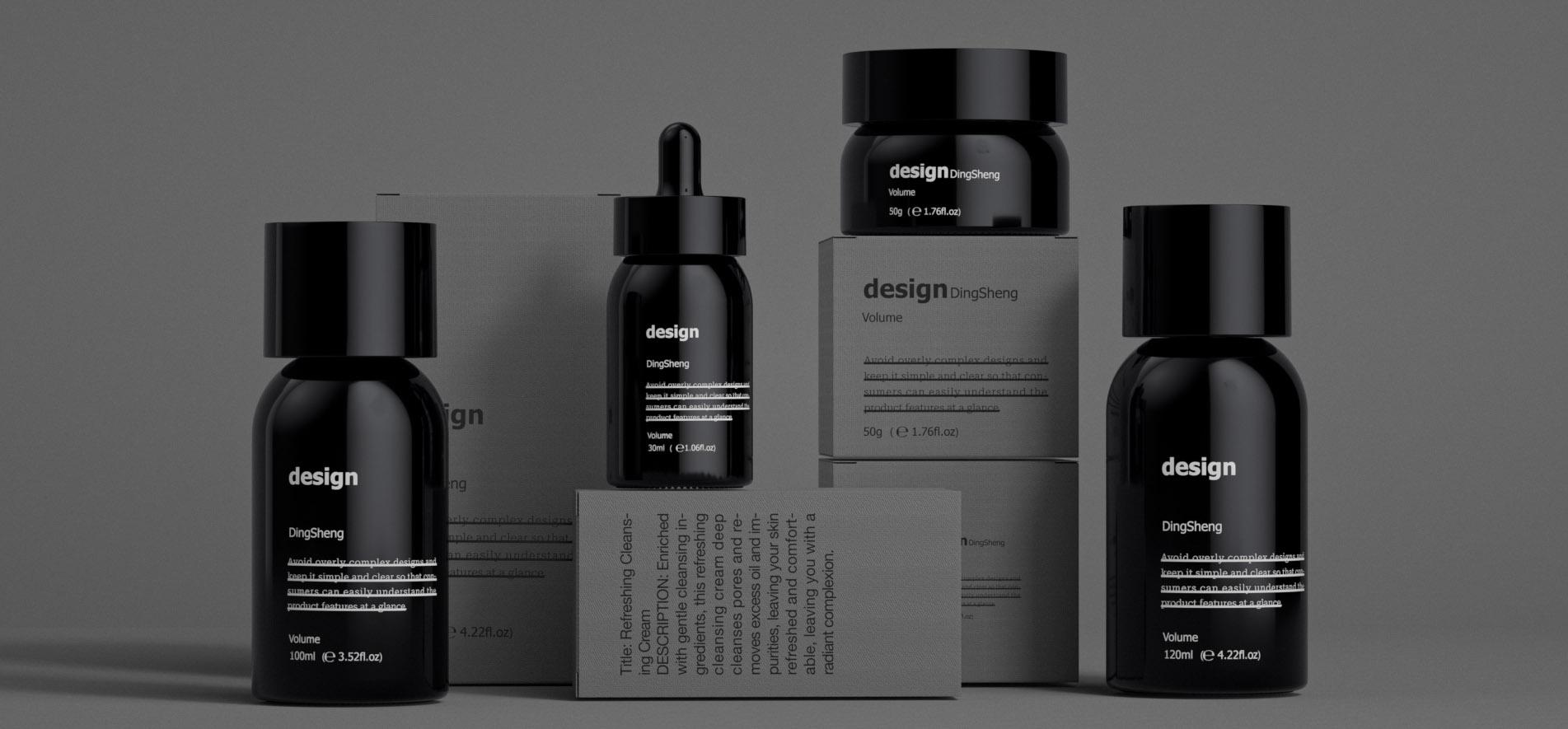
To physically differentiate a product line while maintaining manufacturing efficiency, supply chain directors invest in highly engineered Cosmetic Container Sets. Sourcing a complete, matched set from a single manufacturer ensures that the neck finishes and threading tolerances (such as standard 18/415 or 20/410 dimensions) are identical across the entire product line—from serums to heavy creams.
This standardization guarantees that the torque requirements for automated capping machines on the assembly line remain perfectly consistent. When capping machines do not have to be recalibrated for wildly different thread geometries, facilities experience drastically reduced manufacturing downtime and effectively eliminate costly leakage issues caused by misaligned closures during global transit.
Sourcing cosmetic packaging is a rigid engineering exercise. Every variable, from the moisture transmission rate of the polymer wall to the thread geometry of the closure, impacts the survival and performance of the skincare formula. Treating the bottle merely as an aesthetic shell ignores the fundamental physics occurring inside. Aligning the material science of the container with the chemical profile of the liquid guarantees that the product the consumer applies is exactly the formulation the chemist designed.




 Network Supported